Follow these strategies once your renovation and construction projects are complete to help ensure that the building and interior spaces are maintained and operated correctly in order to ensure continued high performance. Both occupants and operations staff have roles in maintaining facilities at a high level of performance.
Training
Education is the key to changing behavior. Provide information and training regarding key aspects of the building and interior spaces and how occupants and operations staff can support the following facility performance goals:
- Occupant health and wellness (indoor environmental quality)
- Resource conservation (water, energy, materials)
- Waste reduction (recycling)
- Responsible procurement (environmentally preferred products)
- Transportation (mass transit and alternative commuting)
Operations best practices
- Establish tenant-driven workspace optimization teams to promote facility performance and advocate for occupant comfort and safety
- Leverage operational expertise, as well as the scale and diversity of buildings, across building portfolios
- Test promising practices and technologies in real-life circumstances and implement innovative products, services, and ideas that offer the best value
- Respond quickly to occupants’ comfort concerns to help with occupant satisfaction
- Evaluate the impact of operations policies and practices on energy performance
- Provide feedback to occupants on resource use (energy, water, materials) to help achieve performance goals
Procurement best practices
Define acquisition objectives and strategies with stakeholders
- Use Life Cycle Thinking as a decision-making tool
- Compare materials and systems across environmental, social and financial criteria
- Understand how purchases can impact both human and natural resources
- Understand supply chain risks
Follow federal environmental and energy guidelines for product and service purchases
- Ensure purchases are Federal Acquisition Regulation compliant
- Identify any minimum content requirements and environmental programs recommended for specific federal purchases
- Consider exceeding minimum compliance requirements when higher-performing products offer opportunities to reduce life cycle costs
- Incorporate requirements for responsible business conduct when procuring products and services, particularly when sourcing from a foreign country
- Verify contractor compliance with environmental and energy requirements
Minimize waste
- Reduce packaging
- Buy in bulk
- Prioritize products with minimal packaging
- Reduce disposal waste
- Prioritize reusable items over single-use
- Consider ease of maintenance and repair
- Increase recyclability
- Look for items that can be easily disassembled into component materials
- Confirm the availability and operational details of recycling infrastructure
Indoor environmental quality
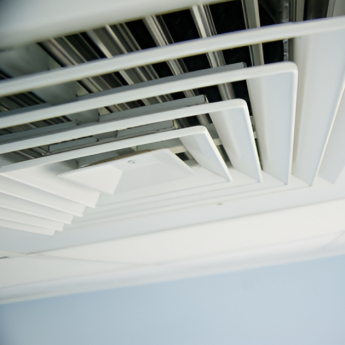
- Ensure operations staff are conducting preventive maintenance on all building exhaust systems (restrooms, garage exhaust fans, etc.)
- Maximize access to daylight and views while avoiding the negative effects of glare
- Ensure occupant comfort of ambient conditions in workspaces through individual or zone control of ventilation and temperature
Ensure delivery of high-quality outdoor air and adequate ventilation
- Install filtration media with a minimum efficiency reporting value of 13
- Install CO2 sensors in densely populated areas to monitor ventilation rates
Energy performance
Optimize energy performance
- Follow Federal Energy Management Program guidance on planning and conducting an Energy Assessment for a Federal Facility
- Implement an energy management information system to monitor, analyze, and control metered building energy use and system performance
- Implement an energy management system to codify energy goals and policies and execute on EMIS outcomes to improve energy performance
- Use the ENERGY STAR Portfolio Manager, with precise thresholds for heating, ventilation, and air conditioning operations to ensure energy efficiency, comfort, operation, and productivity
- Adjust occupancy based systems like HVAC and ventilation to actual occupancy times of the building or use occupancy-based controls
- Follow DOE Operations and Maintenance Guide
- Educate occupants about HVAC, lighting and daylighting system functionality, settings, controls, and energy saving strategies
- Provide feedback to occupants on energy use, temperature, relative humidity, CO2 concentrations, and light levels through the use of a dashboard or other display methods
- Enable power management features on computer, monitor, printer, and copier equipment that turn the device off, or switch the system to a low-power state, when it is inactive
- Deploy advanced power strips to control the power supplied to plug-in devices during unoccupied periods
- Deploy manual-on, vacancy-off control devices for plug loads such as task lighting and monitors
- Deploy scheduled timer control devices to power down printers, copiers, and kitchen appliances during nonbusiness hours
- Respond quickly to equipment malfunctions.
- Encourage occupants and cleaning staff to turn off lights and equipment in unoccupied spaces
- Install vacancy sensors to turn off lights in unoccupied spaces
- Schedule energy intensive activities, such as large copier jobs, during off-peak hours (when energy demand is lowest), usually early morning
- Replace old lighting with LED lighting from the Design Lights Consortium Qualified Products Lists
Water management
- Submeter water systems to identify opportunities for improvement
- Educate occupants about water efficient fixtures and water saving strategies
- Train to operations staff on proper maintenance of waterless urinals
Waste reduction and management
- Communicate facilities guidelines and announcements electronically, versus using printed materials
- Confirm the availability and operational details of recycling and composting infrastructure and institute a program to recycle materials
- Host recycling and composting workshops to educate occupants about what can be recycled and composted and how materials are collected
- Provide well labeled and easily accessible containers for the collection and storage of recyclable and compostable materials; make recycling and composting the default
- Divert construction waste from landfills and facilitate the recycling of construction waste through the standardization of processes
Minimize waste and manage pollutants
- Retrofit existing cooling systems to run on low global warming potential refrigerants
- Ensure the proper disposal of refrigerants when replacing HVAC systems
Custodial services
- Ensure that a healthy cleaning plan, based on a list of healthy cleaning needs, including areas to be cleaned and levels of service, is being implemented, as well as monitored and audited for quality assurance
- Ensure that an exposure control plan is being implemented
- Use cleaners certified to an EPA-recommended standard or ecolabel
- Ensure that a Hazard Communication Plan and Pandemic Plan have been developed
Minimize waste
- Purchase items that are reusable, refillable, and/or washable
- Purchase only the amount needed
- Purchase “post-consumer” materials made from recycled content
References and resources


 U.S. General Services Administration